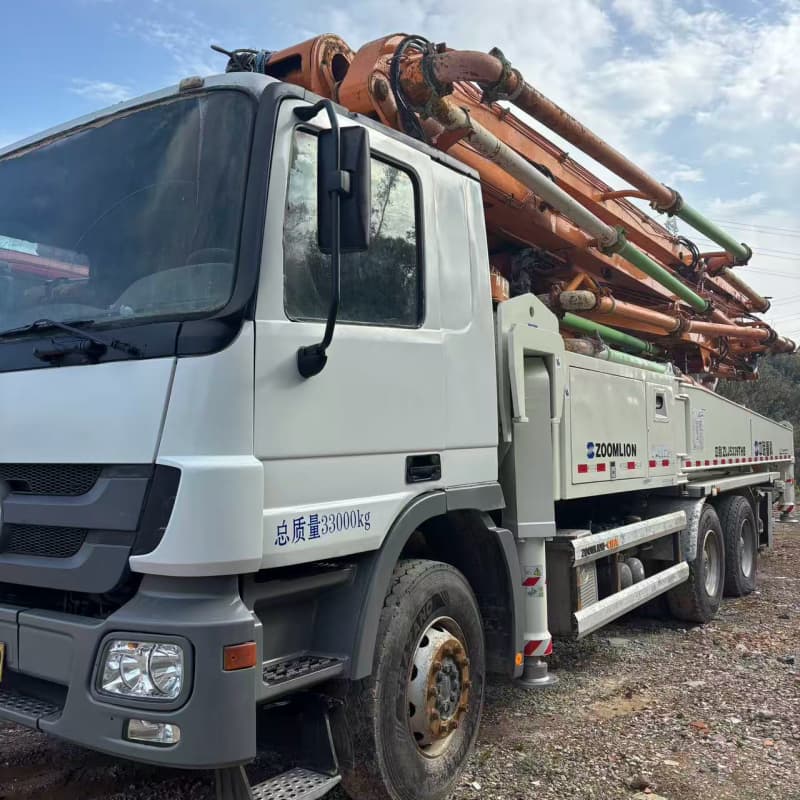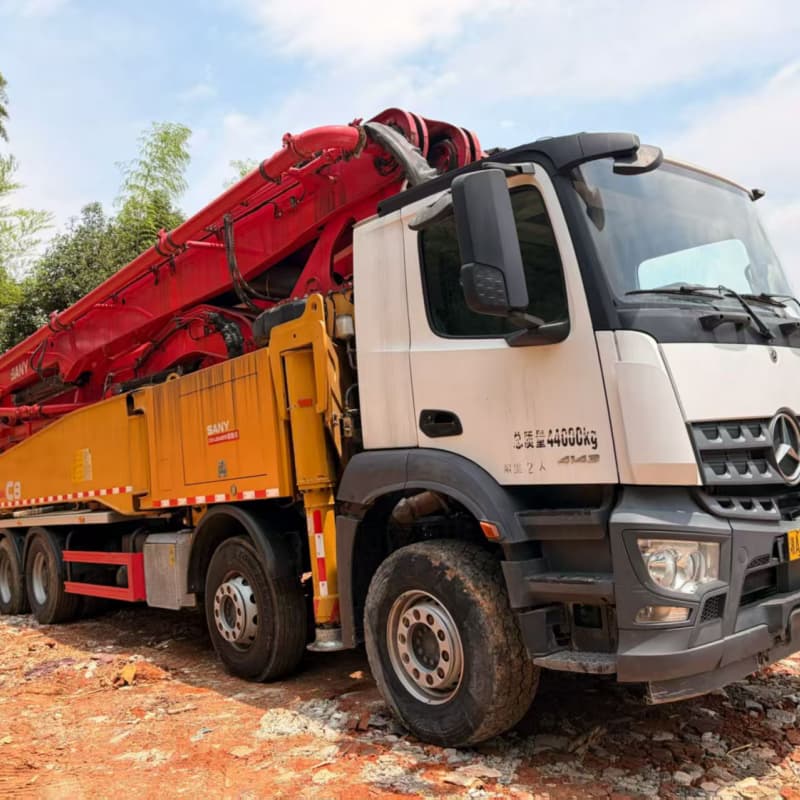

A concrete pump truck boom is one of the most important structural components of the machine. It allows concrete to be delivered efficiently to elevated buildings, bridges, foundations, and other hard-to-reach areas.
However, after years of operation, some concrete pump truck booms may develop cracks around welded joints, connection points, or other highly stressed areas. These cracks can affect structural integrity and, if left undetected, may lead to serious equipment failure.
So, why do boom cracks happen? Are they caused by material quality, excessive workloads, poor maintenance, or normal wear and tear?
In most cases, boom cracking is associated with repeated loading, stress concentrations, operating conditions, corrosion, or a combination of these factors. Understanding the causes and recognizing early warning signs can help equipment owners reduce risks, improve maintenance decisions, and extend the service life of their concrete pump trucks.
In this guide, we explain the common causes of concrete pump boom cracks, where to look for potential problems, and how to prevent them.
Metal fatigue is one of the major mechanisms behind cracks in concrete pump truck booms.
During normal operation, the boom repeatedly extends, folds, rotates, and supports its own weight. Pumping concrete also introduces dynamic forces and vibration into the boom structure.
Over thousands of operating cycles, repeated stress can cause small cracks to initiate and gradually grow, particularly in areas where stress is concentrated.
Fatigue cracking may occur even when individual operating loads remain within the machine’s rated limits. This is why operating hours alone cannot fully describe the structural condition of a used concrete pump truck.
The actual fatigue condition also depends on operating history, load cycles, design, maintenance, and previous damage.
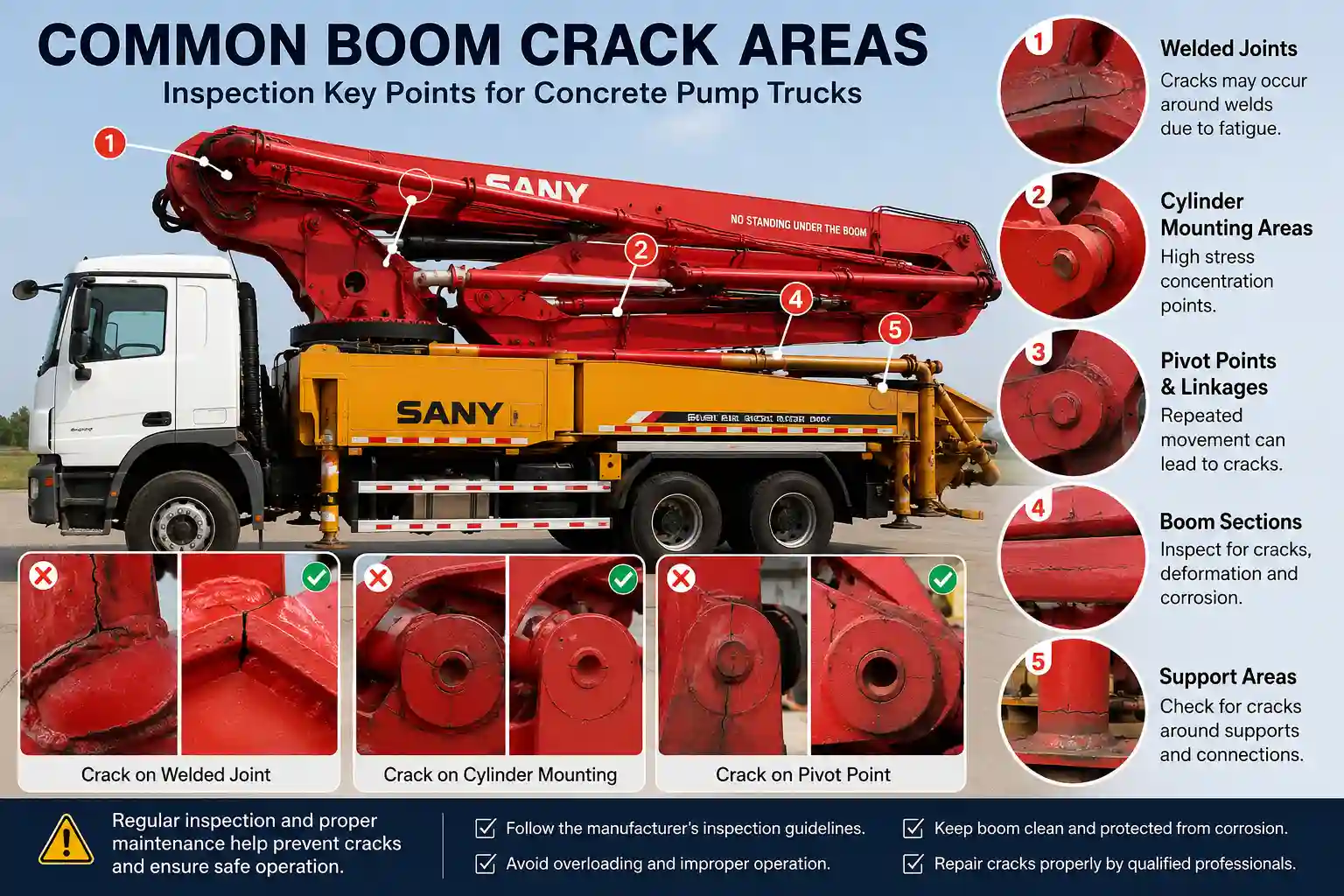
Welded joints connect many of the structural components of a concrete pump boom. These areas can experience higher local stresses because of their geometry, weld profile, residual welding stresses, and the loads transferred between connected parts.
Potentially critical areas include:
Research on concrete pump boom fatigue has identified cracks near welded connections as an important failure mechanism. The exact risk locations, however, depend on the boom design and model.
For this reason, inspections should follow the manufacturer’s guidance and focus on the model-specific critical areas rather than relying on a general visual check alone.
Operating a concrete pump truck outside its specified conditions can increase structural stress and accelerate damage.
Examples of potentially damaging practices include:
Sudden impacts may cause immediate deformation or initiate cracks. Repeated improper loading can also accelerate existing fatigue damage.
Operators should always follow the manufacturer’s operating instructions, boom configuration limits, and site safety procedures.
Small cracks are not always easy to identify, especially when they occur near welds, beneath paint, or in areas that are difficult to access.
If inspections are irregular or do not cover critical structural components, cracks may remain undetected as they grow.
Poor maintenance records can also make it difficult to understand the machine’s previous condition, repairs, and operating history.
A preventive maintenance program should include documented inspections, prompt reporting of abnormalities, and appropriate follow-up examinations by qualified personnel.
Moisture, damaged paint, accumulated dirt, and harsh working environments can contribute to corrosion.
Corrosion may reduce the effective thickness of structural steel and make surface defects more difficult to assess. It can also interact with fatigue damage and increase the risk of structural deterioration.
Particular attention should be paid to areas where water or concrete residue can accumulate, as well as damaged coatings and concealed surfaces.
Corrosion does not automatically mean that a boom has a structural crack, but significant corrosion or suspected section loss should be evaluated by a qualified inspector.
The location of a crack can provide useful information about its possible cause. However, visual appearance alone cannot establish the full extent of the damage or determine whether the machine is safe to operate.
Welded joints are important inspection points because local stress concentrations can contribute to fatigue crack initiation.
Look for visible linear indications, paint separation, unusual rust lines, or changes around the weld profile. These signs require appropriate assessment rather than an assumption that every mark is a crack.
Boom supports and cylinder mounting points transfer substantial forces between structural components.
Damage, deformation, loose connections, or suspected cracking in these areas should be evaluated promptly according to the manufacturer’s inspection procedures.
Boom articulation points experience repeated movement and loading. Worn pins, bushings, and connections may affect alignment and load transfer.
Inspect these components for abnormal movement, excessive wear, deformation, and visible damage. The inspection method and allowable wear limits should be specific to the machine.
The main boom sections should be checked for deformation, corrosion, impact damage, and suspected cracking.
Previously repaired areas deserve particular attention. An undocumented or poorly executed repair may leave uncertainty about the component’s structural condition and remaining service life.
A qualified inspector should determine whether additional examination or engineering assessment is required.
Recognizing possible warning signs early can help prevent minor defects from developing into more serious problems.
Common signs that require further investigation include:
Not every warning sign confirms a structural crack, and some cracks cannot be detected through visual inspection alone.
If a structural crack is suspected, stop using the affected equipment, secure the work area, and arrange an assessment by qualified personnel. Do not continue pumping simply because the crack appears small.
Although not every crack can be prevented, appropriate operation, inspection, and maintenance can help reduce the risk of structural failure.
Operate the concrete pump truck within its specified limits and approved configurations.
Ensure that operators understand the correct setup procedures, site requirements, and restrictions on boom movement.
Avoid unauthorized modifications or operating practices that introduce loads the boom was not designed to withstand.
A practical inspection program should cover the structural boom, welded connections, articulation points, supports, and other components identified by the manufacturer.
Depending on the equipment, inspection activities may include:
Inspection frequency should reflect the manufacturer’s requirements, applicable regulations, machine condition, operating environment, and service history.
Visual inspection is useful but may not identify every crack.
Depending on the material, component geometry, suspected defect, and inspection requirements, qualified personnel may use methods such as magnetic particle testing or ultrasonic testing.
The appropriate method should be selected by a competent inspection professional. Testing should be carried out using suitable procedures and equipment, with the results assessed against applicable acceptance criteria.
A cracked boom should not be repaired simply by welding over the visible defect.
An appropriate repair process may require determining the crack’s extent, identifying the underlying cause, evaluating the structural component, and following an approved repair procedure.
Repairs should be performed by qualified personnel in accordance with the manufacturer’s instructions or an appropriate engineering assessment. Additional inspection may be necessary before the machine returns to service.
Accurate records make it easier to track structural condition and identify recurring problems.
A useful maintenance file should include:
These records are especially valuable when purchasing or selling used concrete pump trucks.
At Yirui Machinery, we understand that choosing a used concrete pump truck requires careful consideration of equipment condition and service history. Buyers should request available machine information and arrange appropriate inspections before making a purchase decision.
Looking for a used concrete pump truck?
Contact Yirui Machinery to discuss your requirements and explore available equipment options for your market.