
There is no universal replacement interval for all construction machinery. Different machines and hydraulic systems have different maintenance requirements.
As a general reference, many construction machines use the following hydraulic oil replacement intervals:
| Equipment Type | General Reference Interval |
|---|---|
| Concrete pump trucks | 2,000–4,000 working hours |
| Excavators | 2,000–4,000 working hours |
| Wheel loaders | 2,000–4,000 working hours |
| Cranes | 2,000–4,000 working hours |
| Other hydraulic equipment | Depends on manufacturer specifications |
Important: These figures are general reference ranges, not universal maintenance requirements. Always follow the equipment manufacturer’s maintenance manual and oil analysis recommendations. Some machines require more frequent oil changes under severe working conditions.
For concrete pump trucks, hydraulic oil condition is particularly important because the equipment often operates under high pressure and demanding working conditions.
Even if your machine has not reached its recommended oil change interval, the hydraulic oil may need attention if its condition deteriorates.
Here are five common warning signs:
New hydraulic oil is usually clear and has a relatively uniform appearance. If the oil becomes unusually dark, cloudy, or contains visible contaminants, it may indicate oxidation, overheating, or contamination.
However, color alone cannot determine whether hydraulic oil needs replacement. Oil analysis provides a more reliable assessment.
Unusual noises from hydraulic pumps, motors, or valves may indicate problems such as air entering the system, insufficient oil supply, cavitation, or contamination.
If you notice abnormal noise, inspect the hydraulic system rather than simply replacing the oil.
If your concrete pump truck experiences slower pumping cycles, reduced operating efficiency, or unstable hydraulic pressure, the hydraulic system may need inspection.
Dirty or degraded hydraulic oil can contribute to poor system performance, especially when combined with clogged filters or component wear.
Excessive hydraulic oil temperature can accelerate oil oxidation and reduce its service life.
Common causes include:
Oil analysis is one of the most effective ways to determine hydraulic oil condition.
Professional testing can identify:
Regular oil analysis helps operators make maintenance decisions based on actual oil condition instead of relying only on working hours.
Ignoring hydraulic oil maintenance can lead to expensive equipment problems.
Potential consequences include:
For concrete pump trucks, hydraulic system failures can interrupt construction projects and result in significant repair costs.
Replacing hydraulic oil at the recommended interval is generally much more economical than repairing major hydraulic components.
Proper maintenance can help keep hydraulic oil in good condition for longer.
Here are six practical maintenance tips:
1. Use the Correct Hydraulic Oil
Always select hydraulic oil with the viscosity grade and specifications recommended by the equipment manufacturer.
2. Replace Hydraulic Filters Regularly
Hydraulic filters remove contaminants from the oil. Replace them according to the manufacturer’s maintenance schedule.
3. Keep the Hydraulic Oil Tank Clean
Prevent dust, water, and other contaminants from entering the hydraulic oil tank during filling or maintenance.
4. Check Oil Levels Regularly
Insufficient hydraulic oil can cause overheating, poor lubrication, and pump damage.
5. Monitor Operating Temperature
Keep the hydraulic cooling system clean and ensure that oil coolers work properly.
6. Conduct Regular Oil Analysis
For machines operating under heavy workloads, periodic oil analysis can help detect problems before they become serious.
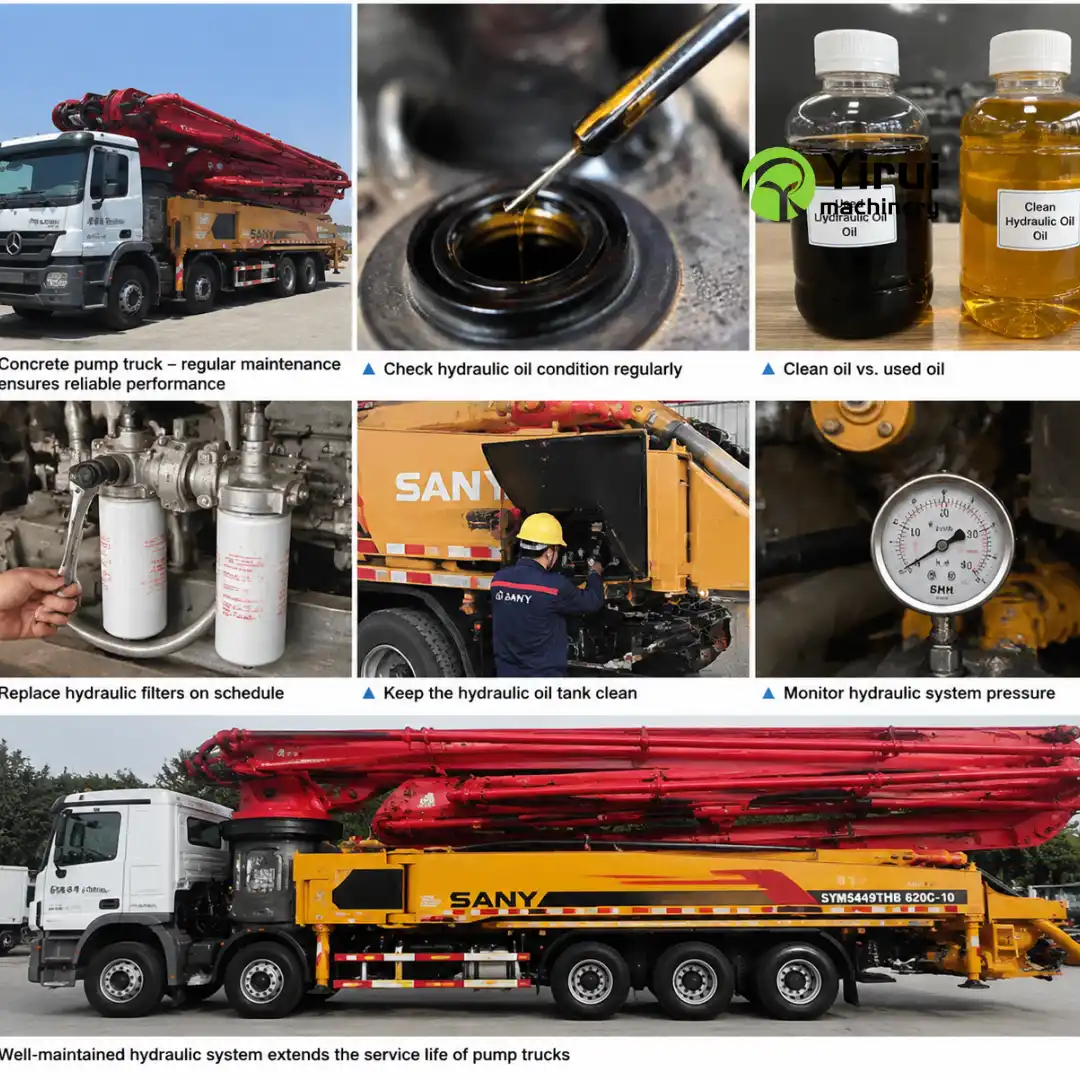
When purchasing a used concrete pump truck, hydraulic oil condition should be one of the key inspection items.
A machine may look clean and operate normally, but its hydraulic oil could still be contaminated or degraded.
Before purchasing a used concrete pump truck, we recommend checking:
If the maintenance history is unclear, replacing the hydraulic oil and filters after purchase is a sensible preventive maintenance measure, provided the correct oil specifications and service procedures are followed.
At Yirui Machinery, we understand that equipment condition and maintenance history are important considerations for international buyers. We encourage customers to inspect machinery carefully before making a purchasing decision.